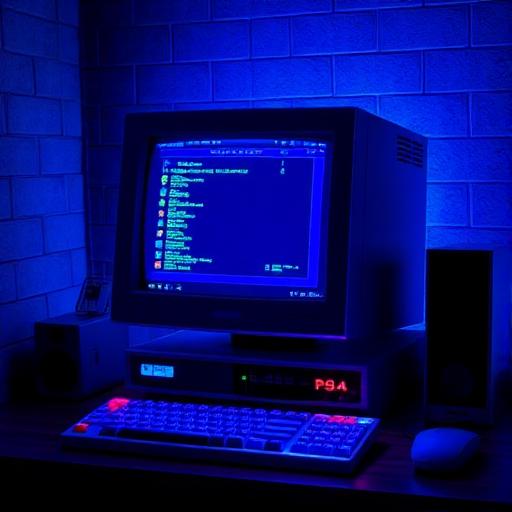
PC Classics
1981 VariousGeneration 0
Personal computer gaming evolved from text adventures to complex simulations and strategy games. The PC platform offered superior graphics, sound, and complexity compared to consoles, establishing genres like real-time strategy and first-person shooters.
5000
Total Games
1981
Release Year
Technical Specifications
Processor
Intel 8086 to Pentium processors
Memory
640KB to 16MB+ RAM depending on era
Media
Floppy disks, CD-ROM
Graphics
CGA, EGA, VGA, and early 3D accelerators
Audio
PC Speaker to Sound Blaster and beyond
PC games
10 titles catalogued. Games with their own page are the ones published emulation testing names directly.
| Title | Year | Developer | Genre |
|---|---|---|---|
| DOOM | 1993 | id Software | First-Person Shooter |
| SimCity | 1989 | Maxis | Simulation, Strategy |
| Sid Meier's Civilization | 1991 | MicroProse | Strategy, Turn-Based |
| Wolfenstein 3D | 1992 | id Software | First-Person Shooter |
| Command & Conquer | 1995 | Westwood Studios | Real-Time Strategy |
| Warcraft: Orcs & Humans | 1994 | Blizzard Entertainment | Real-Time Strategy |
| The Secret of Monkey Island | 1990 | Lucasfilm Games | Adventure |
| Prince of Persia | 1989 | Brøderbund | Platformer, Action |
| Myst | 1993 | Cyan | Adventure, Puzzle |
| Quake | 1996 | id Software | First-Person Shooter |
Questions about the PC
- When was the PC Classics released?
- The PC Classics was released in 1981 by Various. It is a generation 0 console with a library of roughly 5000 titles.
- What are the PC specifications?
- Processor: Intel 8086 to Pentium processors. Memory: 640KB to 16MB+ RAM depending on era. Graphics: CGA, EGA, VGA, and early 3D accelerators. Audio: PC Speaker to Sound Blaster and beyond. Media: Floppy disks, CD-ROM.
- Which PC games are covered here?
- 10 titles: DOOM, SimCity, Sid Meier's Civilization, Wolfenstein 3D, Command & Conquer, Warcraft: Orcs & Humans, The Secret of Monkey Island, Prince of Persia, Myst, Quake.
Fun Facts & Trivia
- • DOS gaming required extensive configuration knowledge
- • Sound Blaster became the de facto audio standard
- • Many PC games had superior graphics to console versions
- • Shareware distribution model was pioneered on PC