The Evolution of Mario: From Jumpman to Gaming Icon
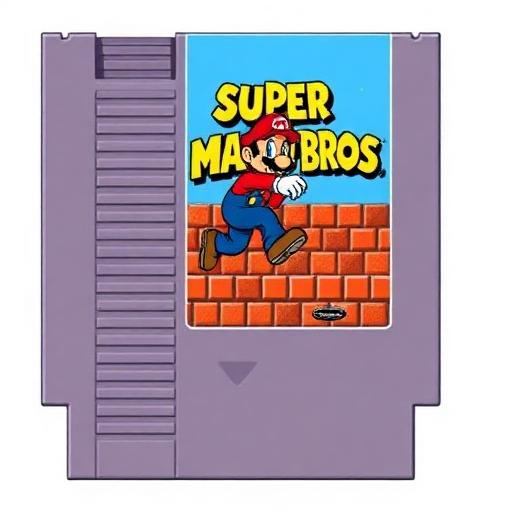
Mario's transformation from a simple arcade character to gaming's most beloved icon represents one of the medium's greatest success stories. Over four decades, the character has evolved while maintaining the core charm that made him special.
The Birth of a Legend (1981-1985)
Mario began life as "Jumpman" in the 1981 arcade classic Donkey Kong. Shigeru Miyamoto designed him with distinctive features that would remain readable on low-resolution screens: a red cap (to avoid animating hair), blue overalls (for contrast), and a prominent mustache (easier to see than a mouth).
The character's name came from Mario Segale, Nintendo of America's landlord, but his personality emerged through gameplay rather than cutscenes. Jumpman's ability to jump over barrels and climb ladders established the foundation for platform gaming.
Early Character Development:
- Donkey Kong (1981) - Introduced as Jumpman, the carpenter hero
- Mario Bros. (1983) - Became Mario the plumber, gained Luigi as a brother
- Super Mario Bros. (1985) - Transformed into the Mushroom Kingdom's hero
The 8-Bit Era: Establishing the Formula
Super Mario Bros. revolutionized both character design and game mechanics. Mario gained the ability to grow with power-ups, creating a visual representation of player progression. The Fire Flower gave him offensive capabilities, while the Super Mushroom made him more resilient.
Miyamoto's design philosophy focused on intuitive character control. Mario's momentum-based movement felt natural, with players able to run faster by holding the button longer. These mechanics became the foundation for every subsequent platformer.
The game's success established Mario as Nintendo's mascot, surpassing even Mickey Mouse in global recognition by the late 1980s.
16-Bit Mastery: Expanding the Universe
Super Mario World introduced Yoshi and Cape Mario, expanding the character's abilities while maintaining his core identity. The game's level design allowed for multiple paths through stages, giving Mario's adventures a sense of exploration beyond simple left-to-right progression.
This era also saw Mario branch into different genres: Dr. Mario proved the character could work in puzzle games, while Super Mario Kart established him in racing. Each spinoff maintained Mario's cheerful personality while adapting to new gameplay styles.
The Third Dimension: Reinventing a Classic
Super Mario 64 represented gaming's most successful transition from 2D to 3D. The analog control stick allowed for precise movement in 3D space, while Mario's expanded moveset (long jumps, wall kicks, ground pounds) provided new ways to navigate environments.
The game's camera system, while revolutionary, required players to actively manage their viewpoint. This challenge became part of the experience, making players feel more connected to Mario's world.
Voice acting brought new personality to the character. Charles Martinet's enthusiastic performance gave Mario his distinctive "Yahoo!" and "Let's-a-go!" catchphrases, adding audio personality to match his visual charm.
Modern Era: Constant Innovation
The Galaxy series redefined 3D Mario gameplay with spherical worlds and gravity-defying mechanics. These games proved that familiar characters could anchor completely new gameplay concepts without losing their essential appeal.
Super Mario Odyssey's possession mechanic allowed Mario to control other creatures and objects, dramatically expanding his abilities while maintaining his core identity. The game's photo mode let players document their adventures, turning Mario into a virtual tourist.
Design Philosophy: Why Mario Endures
Mario's longevity comes from consistent design principles:
- Readable Silhouette - Mario remains instantly recognizable even in silhouette
- Expressive Animation - Every movement conveys personality and emotion
- Versatile Design - The character adapts to new gameplay styles without losing identity
- Universal Appeal - Simple, positive personality transcends cultural barriers
Cultural Impact Beyond Gaming
Mario has appeared in cartoons, movies, theme parks, and countless merchandise items. The character represents video games in popular culture, often serving as shorthand for gaming itself.
His influence extends to game design, with "Mario-like" becoming industry terminology for responsive, momentum-based platforming. Countless indie developers cite Mario games as primary influences.
The Future of an Icon
As gaming technology evolves, Mario continues adapting while preserving his essential characteristics. Virtual reality experiments, mobile gaming entries, and augmented reality features show Nintendo's commitment to keeping the character relevant across all platforms.
Mario's 40-year journey demonstrates that great character design transcends technological limitations. While graphics and gameplay mechanics evolve, the fundamental appeal of a well-designed character remains timeless.
The character's continued success proves that simplicity, charm, and solid gameplay mechanics will always triumph over flashy graphics or complex narratives. Mario remains gaming's greatest ambassador precisely because he embodies the medium's essential joy and accessibility.